How Nobel Prize-winning science is turning the Central Coast into a global destination for quantum technology and jobs
Here’s something too many people on the Central Coast don’t know: we’re home to Nobel Prize-winning physicists. In October 2025, UC Santa Barbara professors John Martinis and Michel Devoret received the Nobel Prize in Physics for proving that quantum mechanical effects can be observed in everyday-sized electronic circuits, not just at subatomic scales.
The awards signaled that the Central Coast has become one of the world’s most important places for quantum science, and the industries growing around it. What does that actually mean for our region? Here’s a quick guide.
What did Martinis and Devoret actually do?
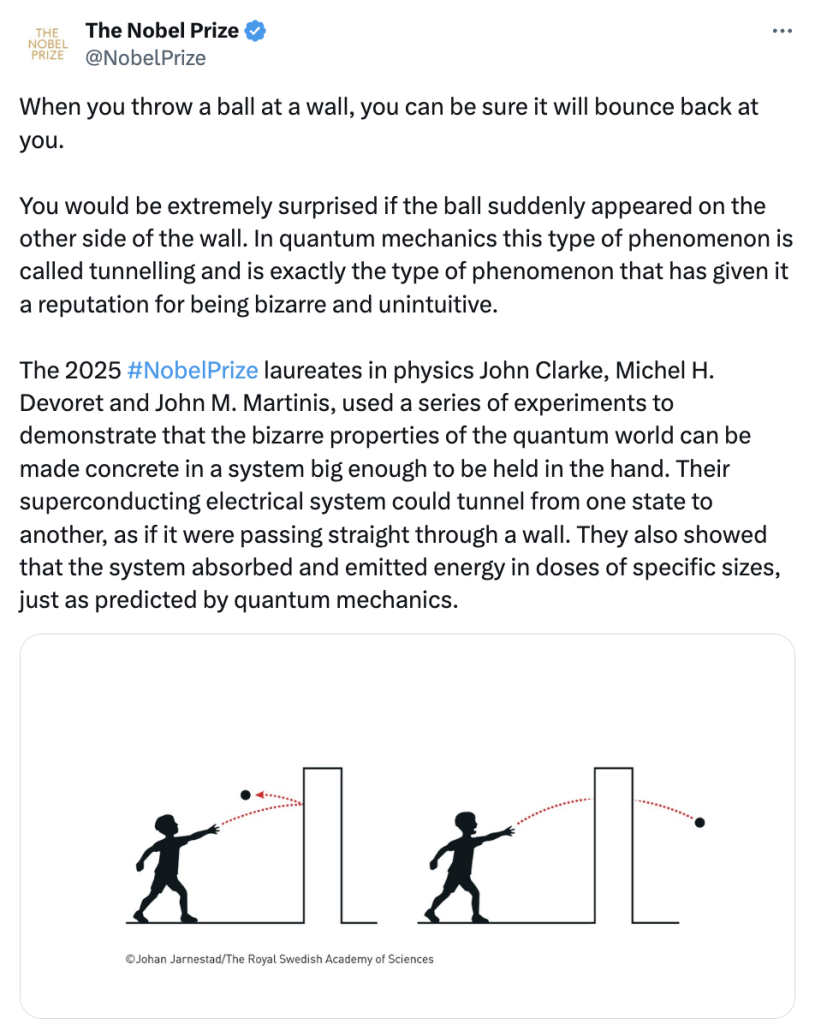
In the 1980s, as a grad student and postdoc working together at Berkeley, they built a superconducting electronic circuit and showed that quantum phenomena like tunneling and energy quantization weren’t confined to the invisible world of atoms — they could happen in something visible to the naked eye.
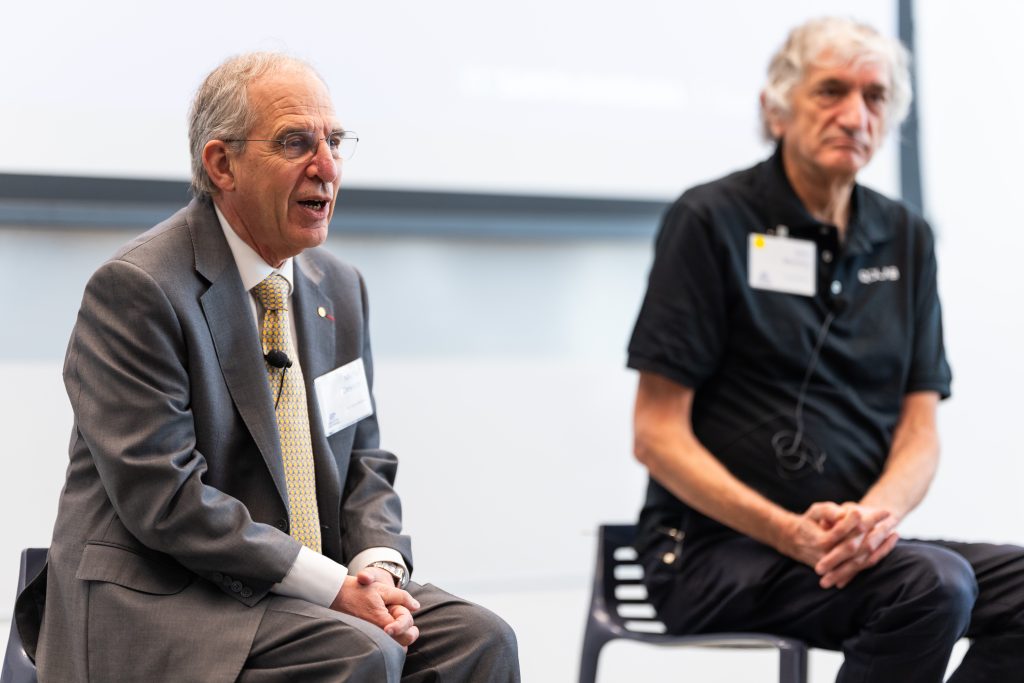
That insight became the foundation for superconducting quantum computing, the approach now used by Google, IBM, and others. Martinis joined UCSB in 2004 and went on to lead Google’s quantum hardware team to a landmark 2019 result: their Sycamore processor performed a calculation in 200 seconds that would have occupied the world’s fastest supercomputer for an estimated 10,000 years. He now runs Qolab, a startup building utility-scale quantum computers. Devoret, after two decades leading quantum research at Yale, joined the UCSB physics faculty in 2024, where he continues to teach and conduct research.
What’s an NSF Quantum Foundry, and why does it matter that Santa Barbara has the only one?
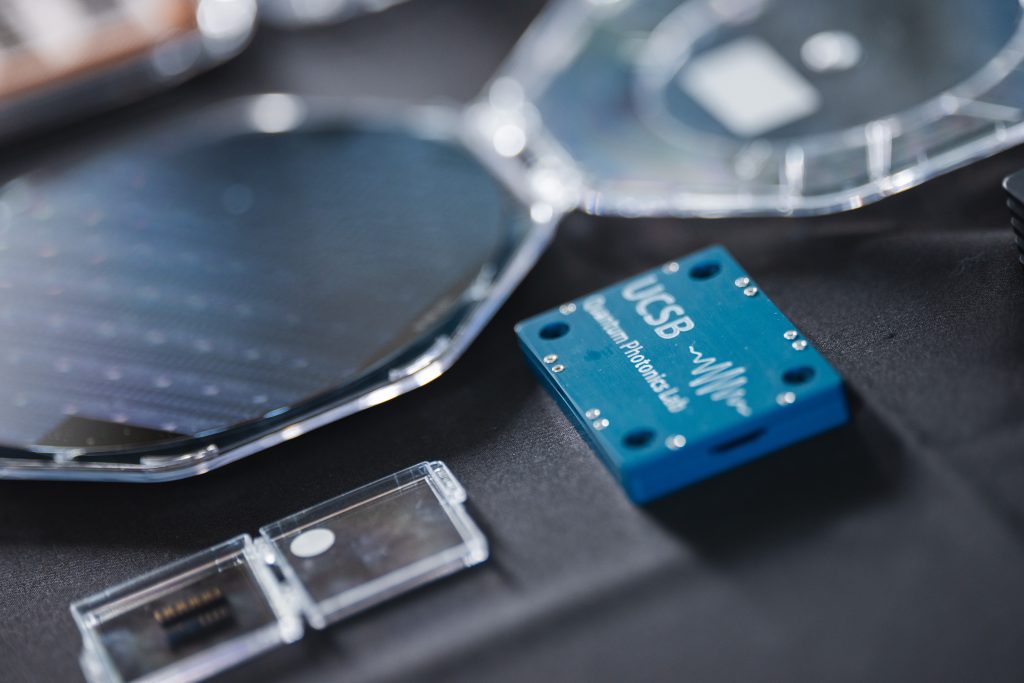
The National Science Foundation intended to fund several Quantum Foundries across the country. Instead, it funded just one: at UCSB. The Foundry’s mission is to develop the advanced materials needed to power quantum technologies, including computers, sensors, and communications devices.
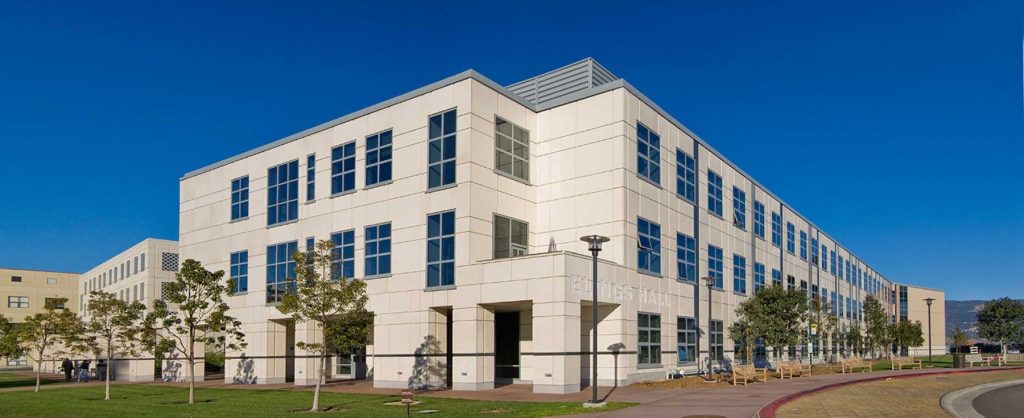
So why Santa Barbara? UCSB brought an unusual combination of assets to the table: one of the largest undergraduate physics programs in the nation, a materials science department ranked among the best anywhere, and the Kavli Institute for Theoretical Physics, widely regarded as the country’s premier center in its field.
But the deciding factor, according to Foundry co-director Ania Jayich, was culture. UC Santa Barbara’s departments don’t just talk about interdisciplinary collaboration. They practice it. That institutional habit of working across boundaries gave UCSB an edge that competitors with deeper pockets couldn’t match.
What is the quantum ecosystem on the Central Coast?
It’s more than a university lab. Google’s global headquarters for quantum computing sits right off Hollister Avenue in Goleta, where the company designs and fabricates its quantum processor chips. (Fun fact: the cooling systems inside the lab operate at about 10 millikelvin, or roughly -460°F — making a quiet building in Goleta one of the coldest spots in the known universe!) Microsoft Station Q is in the neighborhood, too.
The NSF Quantum Foundry, the Eddleman Quantum Institute, and the Kavli Institute all operate on or near campus. UCSB’s Nanofabrication Facility provides 12,000 square feet of clean room space with over $60 million in advanced equipment. And then there’s OASIS, a new 105,000-square-foot R&D facility in Goleta serving as a public-private partnership accelerating the transition of fundamental research into technologies that address national and global priorities — from clean energy and advanced materials to defense, sustainability, and health.
This isn’t just about research labs and institutes. A real semiconductor and quantum-adjacent industry cluster is already thriving here. Dozens of companies in the Santa Barbara and Goleta area trace their roots to UCSB, including spinoffs that have joined the Nasdaq and attracted major acquisitions. That commercial ecosystem is growing, and getting noticed. Companies from the East Coast, Colorado, and the Pacific Northwest are calling, looking to relocate to the Central Coast because of the energy being created here across quantum, electrochemistry, nanofab, and more.
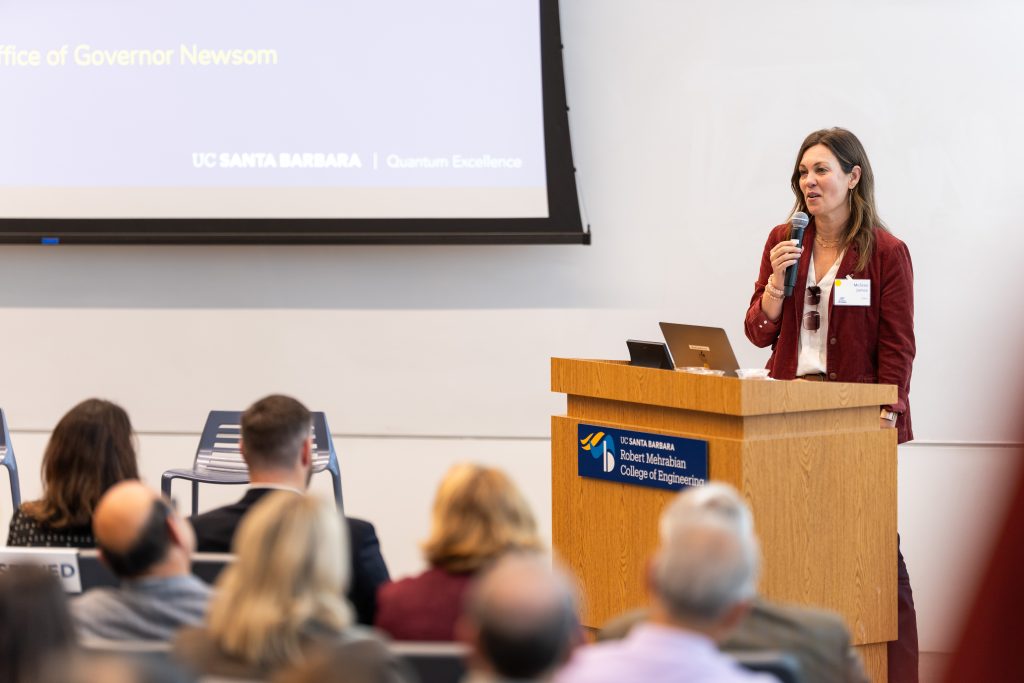
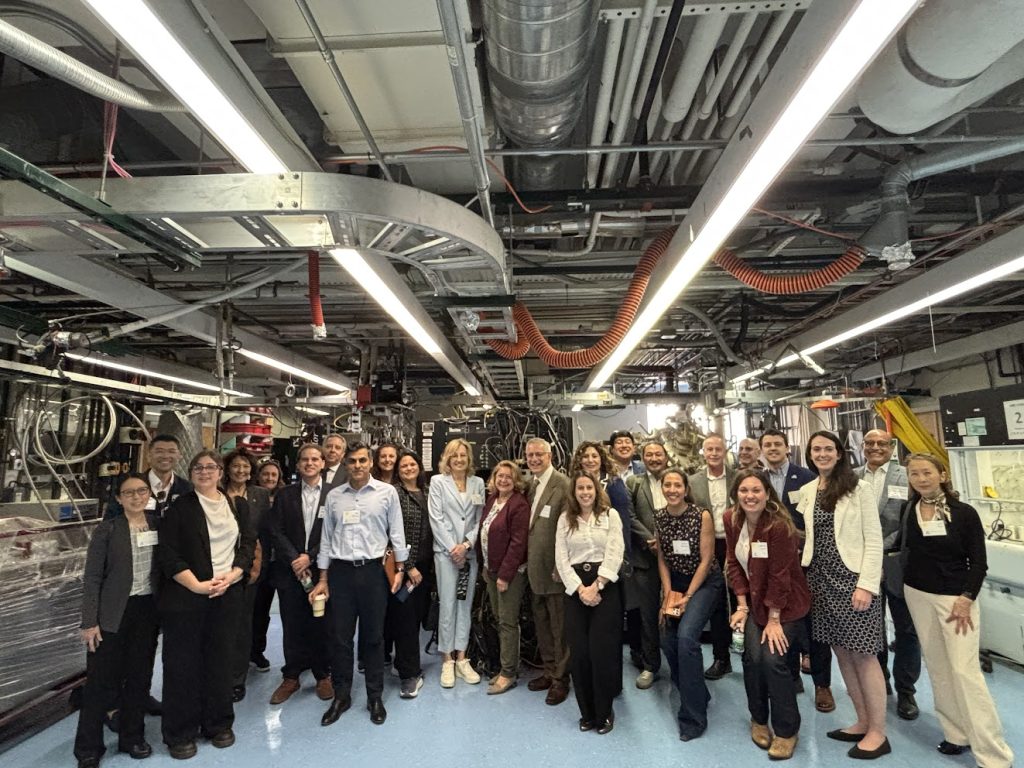
The state has taken notice too. In March, UC Santa Barbara hosted California’s second-ever Quantum California convening — in partnership with GO-Biz and REACH — drawing science, industry, and policy leaders from across the state for lab tours, discovery showcases, and discussion on shaping California’s first quantum sector strategy. Trelynd Bradley, who leads the state’s quantum strategy at GO-Biz, put it plainly: “It is one of the most remarkable concentrations of quantum talent and infrastructure in the world.” REACH President and CEO Melissa James agreed. “The future really starts right here on the Central Coast,” she said, “and in many ways, right here at UC Santa Barbara.”
Why does quantum matter right now?
Quantum computing promises to crack problems that are flatly unsolvable for today’s most powerful supercomputers. Governments and corporations worldwide are pouring billions into the race. What sets the Central Coast apart is that we’re not just doing the fundamental research. We’re translating discoveries into companies, products, and jobs.
As UC Santa Barbara Engineering Dean Umesh Mishra put it when OASIS launched: “Right now, there’s a desert to cross between discovery and delivery. This space will be an oasis where ideas don’t die in the lab, but grow into solutions that benefit society.” That bridge between lab and market is exactly what makes the Central Coast a place to watch — and a place to invest in.

